Buy waste2go.eu ?
We are moving the project
waste2go.eu .
Are you interested in purchasing the domain
waste2go.eu ?
domain@kv-gmbh.de · 0541-91531010
Buy waste2go.eu ?
What are environmentally friendly and environmentally harmful packaging?
Environmentally friendly packaging includes materials that are easily recyclable, biodegradable, or made from renewable resources, such as paper, cardboard, and certain types of plastics. These materials have a lower impact on the environment and can be easily disposed of without causing harm. On the other hand, environmentally harmful packaging includes materials that are not easily recyclable, take a long time to decompose, or release harmful chemicals into the environment, such as single-use plastics, styrofoam, and non-recyclable mixed materials. These materials contribute to pollution, waste, and harm to wildlife and ecosystems. **
Can tissues be disposed of in a more environmentally friendly way by composting them or putting them in the recycling bin?
Tissues cannot be composted or put in the recycling bin. Tissues are made of paper, but they are not suitable for recycling because they are often contaminated with bodily fluids and are too small and fragile to be processed in recycling facilities. Composting is also not recommended for tissues because they can introduce pathogens and contaminants into the composting process. The best way to dispose of tissues is to throw them in the regular trash. **
Similar search terms for Simon-Schuster-Principles-and
Top-Angebote
Products related to Simon-Schuster-Principles-and:
-
Simon & Schuster Principles and Principles for Dealing with the Changing World Order 2 Books Collection Set by Ray DalioRay Dalio Collection 2 Books Set (Principles Life and Work, Principles for Dealing with the Changing World Order): Principles Life and Work: In Principles, Dalio shares what he’s learned over the course of his remarkable career. He argues that life, management, economics, and investing can all be systemized into rules and understood like machines. The book’s hundreds of practical lessons, which are built around his cornerstones of “radical truth” and “radical transparency,” include Dalio laying out the most effective ways for individuals and organizations to make decisions, approach challenges, and build strong teams. Principles for Dealing with the Changing World Order: A few years ago, Ray Dalio noticed a confluence of political and economic conditions he hadn’t encountered before. They included huge debts and zero or near-zero interest rates that led to massive printing of money in the world’s three major reserve currencies; big political and social conflicts within countries, especially the US, due to the largest wealth, political and values disparities in more than 100 years; and the rising of a world power (China) to challenge the existing world power (US) and the existing world order.30,99 £*Shipping: 2,99 £Secure redirect to the provider
-
Simon and Schuster Ray Dalio Collection 3 Books Set (Principles Life and Work, Principles for Dealing with the Changing World Order, Principles Your Guided Journal)Ray Dalio Collection 3 Books Set (Principles Life and Work, Principles for Dealing with the Changing World Order, Principles Your Guided Journal) Principles Life and Work In Principles, Dalio shares what he’s learned over the course of his remarkable career. He argues that life, management, economics, and investing can all be systemized into rules and understood like machines. The book’s hundreds of practical lessons, which are built around his cornerstones of “radical truth” and “radical transparency,” include Dalio laying out the most effective ways for individuals and organizations to make decisions, approach challenges, and build strong teams. Principles for Dealing with the Changing World Order A few years ago, Ray Dalio noticed a confluence of political and economic conditions he hadn’t encountered before. They included huge debts and zero or near-zero interest rates that led to massive printing of money in the world’s three major reserve currencies; big political and social conflicts within countries, especially the US, due to the largest wealth, political and values disparities in more than 100 years; and the rising of a world power (China) to challenge the existing world power (US) and the existing world order. Principles Your Guided Journal In his international bestseller Principles, legendary investor Ray Dalio introduced millions of readers around the world to the unconventional approach he developed as the founder and builder of Bridgewater Associates, the largest and most successful hedge fund in the world. Dalio attributes his unique success to his process of recording, refining and acting on a set of well-defined principles, which are effectively decision-rules for getting what you want out of life and work.34,99 £*Shipping: 2,99 £Secure redirect to the provider
-
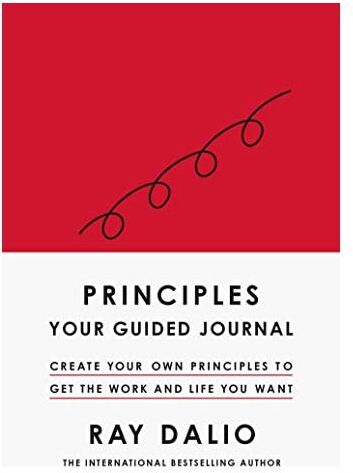
Simon & Schuster Principles: Your Guided Journal: Create Your Own Principles to Get the Work and Life You Want by Ray DalioIn his international bestseller Principles, legendary investor Ray Dalio introduced millions of readers around the world to the unconventional approach he developed as the founder and builder of Bridgewater Associates, the largest and most successful hedge fund in the world. Dalio attributes his unique success to his process of recording, refining and acting on a set of well-defined principles, which are effectively decision-rules for getting what you want out of life and work. His goal in publishing the book was to show readers the value of principle-based thinking so that they could develop their own principles, aligned with their own values, for getting whatever they wanted out of life. With this new journal, Dalio takes his goal one step further to help readers reflect on and record their own principles. He does that by providing a series of guided exercises and questions for reflecting on what you’re like, what you value, and what principles will best help you achieve your goals. These exercises draw from key concepts in the original Principles book, including: 1. How to identify your strengths, weaknesses, motivations and preferences 2. How to use the 'five-step process' to achieve your goals 3. How to become both 'assertive and open-minded at the same time' 4. How to maximise your learning from your mistakes (which are inevitable) All of these exercises can optionally be enhanced using the free Principles in Action iOS and Android app, which provides an even more interactive, multimedia experience, and they are followed by a number of blank journal pages containing thought-provoking and unconventional prompts from Principles aimed at helping you formulate your own principles. The experience concludes with a structured reflection on where you and your loved ones are along life’s journey, leaving you with a highly personalised, practical playbook for achieving success in the years ahead.12,99 £*Shipping: 2,99 £Secure redirect to the provider
-
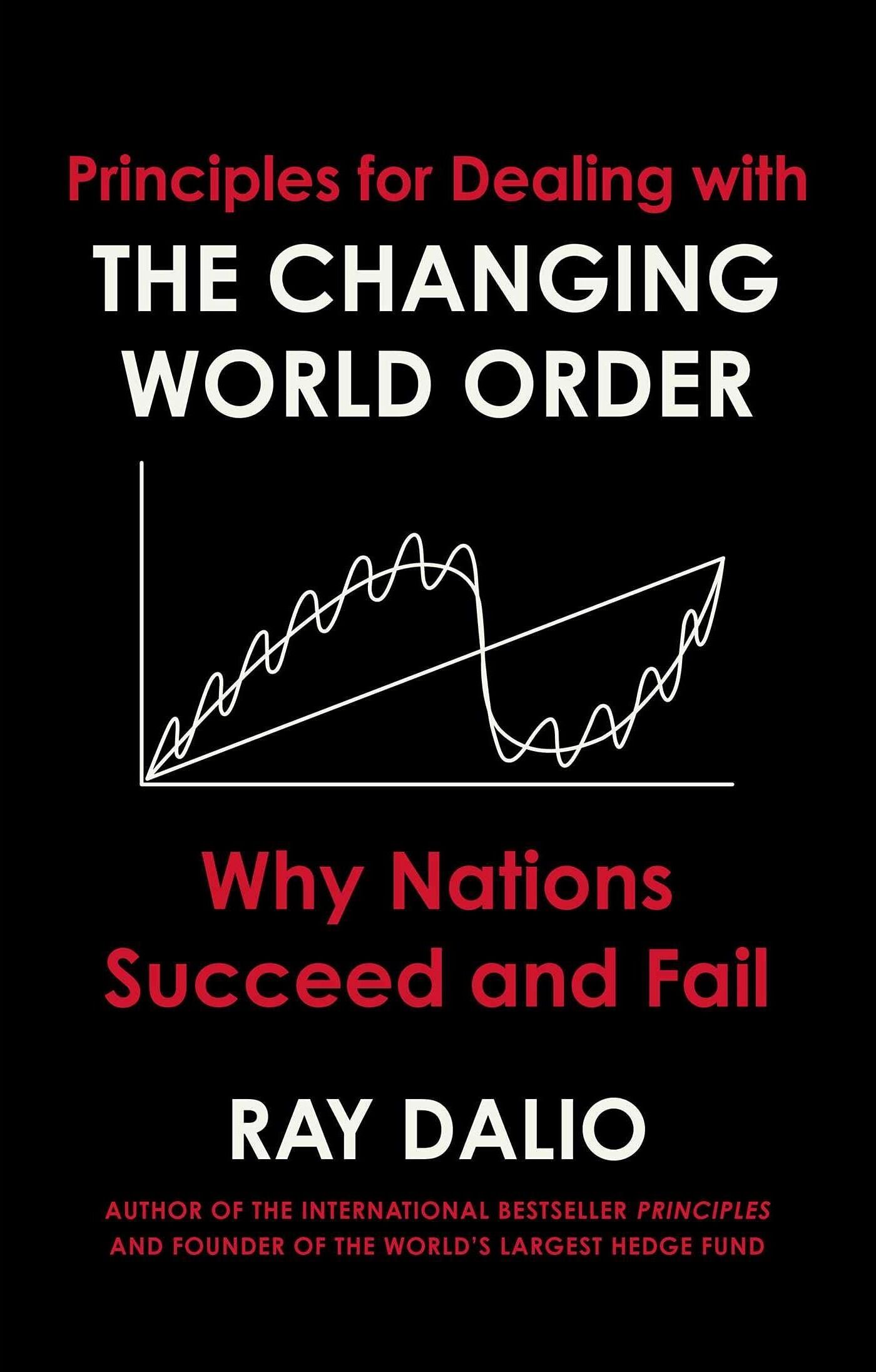
Simon & Schuster UK Principles for Dealing with the Changing World Order: Why Nations Succeed or Fail by Ray DalioFrom legendary investor Ray Dalio, author of the international bestseller Principles, who has spent half a century studying global economies and markets, Principles for Dealing with the Changing World Order examines history’s most turbulent economic and political periods to reveal why the times ahead will likely be radically different from those we’ve experienced in our lifetimes - but similar to those that have happened many times before. A few years ago, Ray Dalio noticed a confluence of political and economic conditions he hadn’t encountered before. They included huge debts and zero or near-zero interest rates that led to massive printing of money in the world’s three major reserve currencies; big political and social conflicts within countries, especially the US, due to the largest wealth, political and values disparities in more than 100 years; and the rising of a world power (China) to challenge the existing world power (US) and the existing world order. The last time that this confluence occurred was between 1930 and 1945. This realisation sent Dalio on a search for the repeating patterns and cause/effect relationships underlying all major changes in wealth and power over the last 500 years. In this remarkable and timely addition to his Principles series, Dalio brings readers along for his study of the major empires - including the Dutch, the British and the American - putting into perspective the 'Big Cycle' that has driven the successes and failures of all the world’s major countries throughout history. Dalio reveals the timeless and universal forces behind these shifts and uses them to look into the future, offering practical principles for positioning oneself for what’s ahead.13,99 £*Shipping: 2,99 £Secure redirect to the provider
-
Is silicone environmentally friendly?
Silicone is considered to be more environmentally friendly than many other materials because it is durable, long-lasting, and can be recycled. It is non-toxic, does not leach harmful chemicals, and is resistant to extreme temperatures, reducing the need for frequent replacements. However, the production of silicone can still have environmental impacts, such as the use of fossil fuels in its manufacturing process. Overall, silicone is a better alternative to many other materials in terms of its environmental impact, but it is not completely without drawbacks. **
-
Are pods environmentally friendly?
Pods are not necessarily environmentally friendly. While they may reduce waste compared to traditional single-use plastic packaging, many pods are still made of plastic and are not easily recyclable. Additionally, the production and transportation of pods can have a significant environmental impact. Some companies are working to make more sustainable pod options, such as compostable or recyclable materials, but it is important to research and choose environmentally friendly options when using pods. **
-
Is socialism environmentally friendly?
Socialism can be environmentally friendly as it often emphasizes collective ownership and control of resources, which can lead to more sustainable practices. By prioritizing the needs of the community over profit, socialist systems may be more inclined to implement policies that protect the environment. However, the extent to which socialism is environmentally friendly can vary depending on how it is implemented and the specific policies put in place. Ultimately, a combination of socialist principles and environmental considerations can lead to a more sustainable and eco-friendly society. **
-
Are cruises environmentally friendly?
Cruises are not considered environmentally friendly due to their significant impact on marine ecosystems and air quality. Cruise ships produce large amounts of air and water pollution, including emissions from engines, waste disposal, and ballast water discharge. Additionally, the construction and operation of cruise ships contribute to carbon emissions and other environmental issues. Efforts are being made to improve the environmental sustainability of cruises, such as implementing cleaner technologies and waste management practices, but there is still a long way to go in making the industry truly eco-friendly. **

What can I do to live an environmentally friendly lifestyle and use environmentally friendly school supplies?
To live an environmentally friendly lifestyle, you can start by reducing your use of single-use plastics and opting for reusable alternatives such as water bottles, lunch containers, and shopping bags. You can also conserve energy by turning off lights and electronics when not in use, and by using energy-efficient appliances. When it comes to school supplies, look for items made from recycled materials and choose products that are biodegradable or compostable. Additionally, consider purchasing in bulk to reduce packaging waste and support companies that prioritize sustainability in their production processes. **
Is baking powder bio-based and environmentally friendly?
Baking powder is a chemical leavening agent that typically contains a combination of bicarbonate of soda, an acid, and a moisture-absorbing agent. While some baking powders may contain bio-based ingredients, such as cream of tartar as the acid component, the overall product is not considered entirely bio-based. In terms of environmental friendliness, baking powder is generally safe for the environment when used in moderation, as it breaks down into harmless substances during baking. However, excessive use of baking powder can contribute to sodium levels in waterways, which may have negative environmental impacts. **
Top-Angebote
Products related to Simon-Schuster-Principles-and:
-
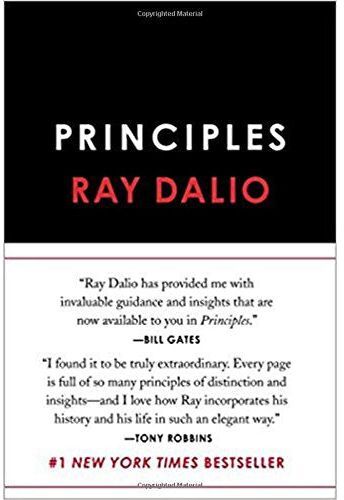
Simon & Schuster Principles: Life and Work by Ray Dalio#1 NEW YORK TIMES BESTSELLER * 5 MILLION COPIES SOLD “Significant...The book is both instructive and surprisingly moving.” —The New York Times Ray Dalio, one of the world’s most successful investors and entrepreneurs, shares the unconventional principles that he’s developed, refined, and used over the past forty years to create unique results in both life and business—and which any person or organization can adopt to help achieve their goals. In 1975, Ray Dalio founded an investment firm, Bridgewater Associates, out of his two-bedroom apartment in New York City. Forty years later, Bridgewater has made more money for its clients than any other hedge fund in history and grown into the fifth most important private company in the United States, according to Fortune magazine. Dalio himself has been named to Time magazine’s list of the 100 most influential people in the world. Along the way, Dalio discovered a set of unique principles that have led to Bridgewater’s exceptionally effective culture, which he describes as “an idea meritocracy that strives to achieve meaningful work and meaningful relationships through radical transparency.” It is these principles, and not anything special about Dalio—who grew up an ordinary kid in a middle-class Long Island neighborhood—that he believes are the reason behind his success. In Principles, Dalio shares what he’s learned over the course of his remarkable career. He argues that life, management, economics, and investing can all be systemized into rules and understood like machines. The book’s hundreds of practical lessons, which are built around his cornerstones of “radical truth” and “radical transparency,” include Dalio laying out the most effective ways for individuals and organizations to make decisions, approach challenges, and build strong teams. He also describes the innovative tools the firm uses to bring an idea meritocracy to life, such as creating “baseball cards” for all employees that distill their strengths and weaknesses, and employing computerized decision-making systems to make believability-weighted decisions. While the book brims with novel ideas for organizations and institutions, Principles also offers a clear, straightforward approach to decision-making that Dalio believes anyone can apply, no matter what they’re seeking to achieve. Here, from a man who has been called both “the Steve Jobs of investing” and “the philosopher king of the financial universe” (CIO magazine), is a rare opportunity to gain proven advice unlike anything you’ll find in the conventional business press.15,99 £*Shipping: 2,99 £Secure redirect to the provider
-
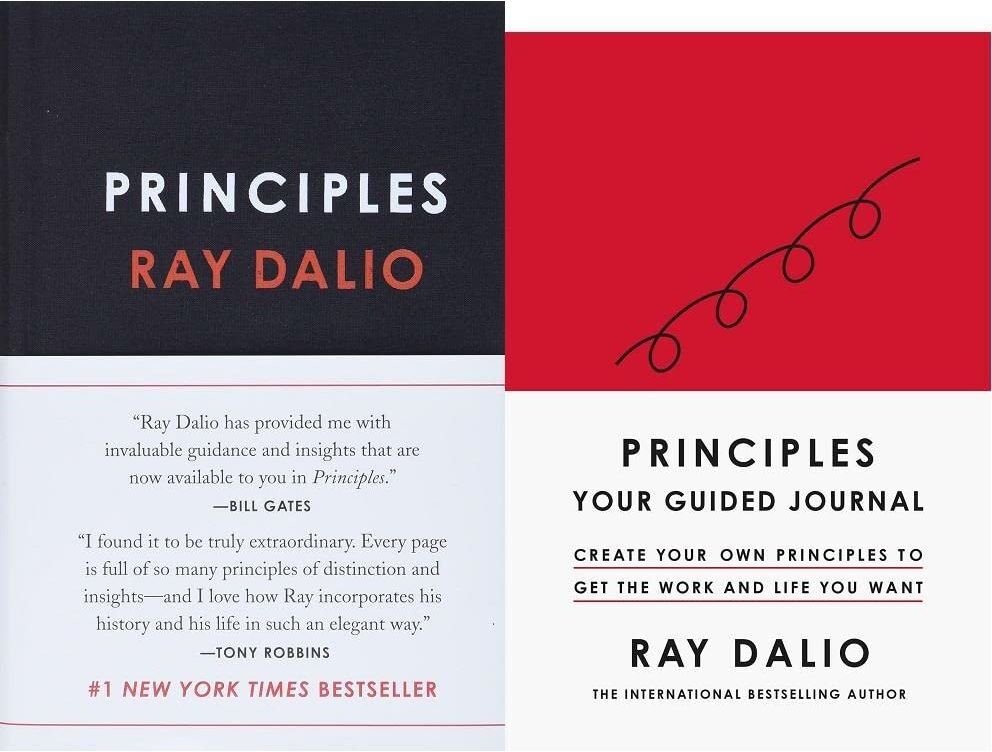
Simon & Schuster Principles Life and Work, Principles Your Guided Journal 2 Books Collection SetPrinciples: Life and Work, Principles Your Guided Journal 2 Books Collection Set Principles: Life and Work In Principles, Dalio shares what he’s learned over the course of his remarkable career. He argues that life, management, economics, and investing can all be systemized into rules and understood like machines. The book’s hundreds of practical lessons, which are built around his cornerstones of “radical truth” and “radical transparency,” include Dalio laying out the most effective ways for individuals and organizations to make decisions, approach challenges, and build strong teams. He also describes the innovative tools the firm uses to bring an idea meritocracy to life, such as creating “baseball cards” for all employees that distill their strengths and weaknesses, and employing computerized decision-making systems to make believability-weighted decisions. While the book brims with novel ideas for organizations and institutions, Principles also offers a clear, straightforward approach to decision-making that Dalio believes anyone can apply, no matter what they’re seeking to achieve. Principles: Your Guided Journal: With this new journal, Dalio takes his goal one step further to help readers reflect on and record their own principles. He does that by providing a series of guided exercises and questions for reflecting on what you’re like, what you value, and what principles will best help you achieve your goals. These exercises draw from key concepts in the original Principles book, including: 1. How to identify your strengths, weaknesses, motivations and preferences 2. How to use the 'five-step process' to achieve your goals 3. How to become both 'assertive and open-minded at the same time' 4. How to maximise your learning from your mistakes (which are inevitable)22,99 £*Shipping: 2,99 £Secure redirect to the provider
-
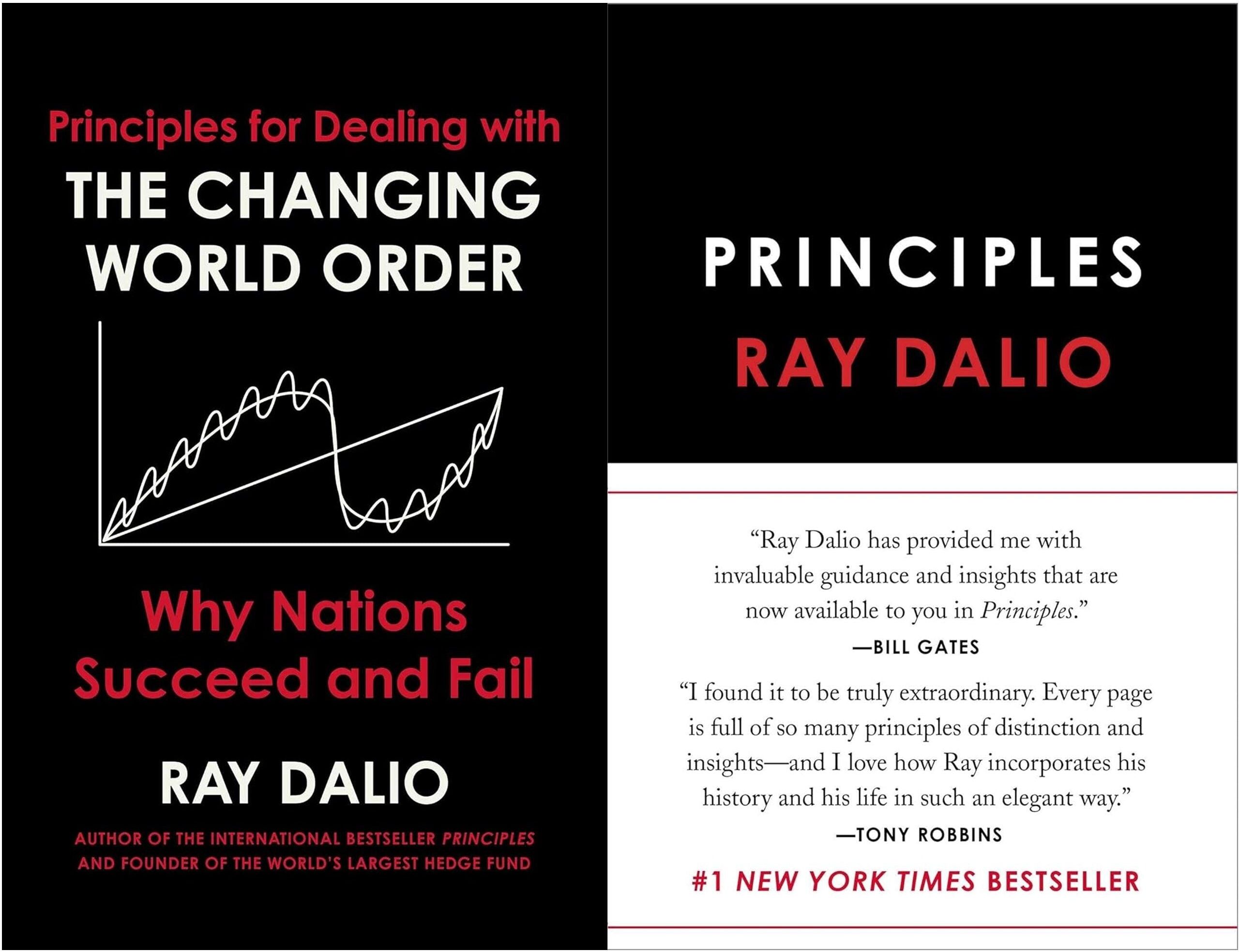
Simon & Schuster Principles and Principles for Dealing with the Changing World Order 2 Books Collection Set by Ray DalioRay Dalio Collection 2 Books Set (Principles Life and Work, Principles for Dealing with the Changing World Order): Principles Life and Work: In Principles, Dalio shares what he’s learned over the course of his remarkable career. He argues that life, management, economics, and investing can all be systemized into rules and understood like machines. The book’s hundreds of practical lessons, which are built around his cornerstones of “radical truth” and “radical transparency,” include Dalio laying out the most effective ways for individuals and organizations to make decisions, approach challenges, and build strong teams. Principles for Dealing with the Changing World Order: A few years ago, Ray Dalio noticed a confluence of political and economic conditions he hadn’t encountered before. They included huge debts and zero or near-zero interest rates that led to massive printing of money in the world’s three major reserve currencies; big political and social conflicts within countries, especially the US, due to the largest wealth, political and values disparities in more than 100 years; and the rising of a world power (China) to challenge the existing world power (US) and the existing world order.30,99 £*Shipping: 2,99 £Secure redirect to the provider
-
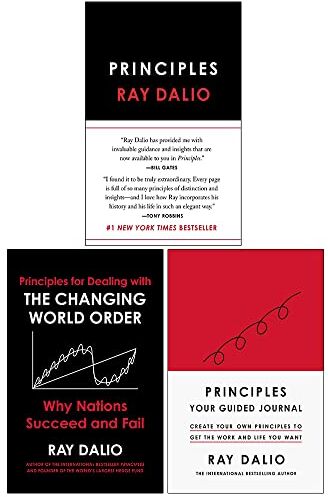
Simon and Schuster Ray Dalio Collection 3 Books Set (Principles Life and Work, Principles for Dealing with the Changing World Order, Principles Your Guided Journal)Ray Dalio Collection 3 Books Set (Principles Life and Work, Principles for Dealing with the Changing World Order, Principles Your Guided Journal) Principles Life and Work In Principles, Dalio shares what he’s learned over the course of his remarkable career. He argues that life, management, economics, and investing can all be systemized into rules and understood like machines. The book’s hundreds of practical lessons, which are built around his cornerstones of “radical truth” and “radical transparency,” include Dalio laying out the most effective ways for individuals and organizations to make decisions, approach challenges, and build strong teams. Principles for Dealing with the Changing World Order A few years ago, Ray Dalio noticed a confluence of political and economic conditions he hadn’t encountered before. They included huge debts and zero or near-zero interest rates that led to massive printing of money in the world’s three major reserve currencies; big political and social conflicts within countries, especially the US, due to the largest wealth, political and values disparities in more than 100 years; and the rising of a world power (China) to challenge the existing world power (US) and the existing world order. Principles Your Guided Journal In his international bestseller Principles, legendary investor Ray Dalio introduced millions of readers around the world to the unconventional approach he developed as the founder and builder of Bridgewater Associates, the largest and most successful hedge fund in the world. Dalio attributes his unique success to his process of recording, refining and acting on a set of well-defined principles, which are effectively decision-rules for getting what you want out of life and work.34,99 £*Shipping: 2,99 £Secure redirect to the provider
-
What are environmentally friendly and environmentally harmful packaging?
Environmentally friendly packaging includes materials that are easily recyclable, biodegradable, or made from renewable resources, such as paper, cardboard, and certain types of plastics. These materials have a lower impact on the environment and can be easily disposed of without causing harm. On the other hand, environmentally harmful packaging includes materials that are not easily recyclable, take a long time to decompose, or release harmful chemicals into the environment, such as single-use plastics, styrofoam, and non-recyclable mixed materials. These materials contribute to pollution, waste, and harm to wildlife and ecosystems. **
-
Can tissues be disposed of in a more environmentally friendly way by composting them or putting them in the recycling bin?
Tissues cannot be composted or put in the recycling bin. Tissues are made of paper, but they are not suitable for recycling because they are often contaminated with bodily fluids and are too small and fragile to be processed in recycling facilities. Composting is also not recommended for tissues because they can introduce pathogens and contaminants into the composting process. The best way to dispose of tissues is to throw them in the regular trash. **
-
Is silicone environmentally friendly?
Silicone is considered to be more environmentally friendly than many other materials because it is durable, long-lasting, and can be recycled. It is non-toxic, does not leach harmful chemicals, and is resistant to extreme temperatures, reducing the need for frequent replacements. However, the production of silicone can still have environmental impacts, such as the use of fossil fuels in its manufacturing process. Overall, silicone is a better alternative to many other materials in terms of its environmental impact, but it is not completely without drawbacks. **
-
Are pods environmentally friendly?
Pods are not necessarily environmentally friendly. While they may reduce waste compared to traditional single-use plastic packaging, many pods are still made of plastic and are not easily recyclable. Additionally, the production and transportation of pods can have a significant environmental impact. Some companies are working to make more sustainable pod options, such as compostable or recyclable materials, but it is important to research and choose environmentally friendly options when using pods. **
Similar search terms for Simon-Schuster-Principles-and
-
Simon & Schuster Principles: Your Guided Journal: Create Your Own Principles to Get the Work and Life You Want by Ray DalioIn his international bestseller Principles, legendary investor Ray Dalio introduced millions of readers around the world to the unconventional approach he developed as the founder and builder of Bridgewater Associates, the largest and most successful hedge fund in the world. Dalio attributes his unique success to his process of recording, refining and acting on a set of well-defined principles, which are effectively decision-rules for getting what you want out of life and work. His goal in publishing the book was to show readers the value of principle-based thinking so that they could develop their own principles, aligned with their own values, for getting whatever they wanted out of life. With this new journal, Dalio takes his goal one step further to help readers reflect on and record their own principles. He does that by providing a series of guided exercises and questions for reflecting on what you’re like, what you value, and what principles will best help you achieve your goals. These exercises draw from key concepts in the original Principles book, including: 1. How to identify your strengths, weaknesses, motivations and preferences 2. How to use the 'five-step process' to achieve your goals 3. How to become both 'assertive and open-minded at the same time' 4. How to maximise your learning from your mistakes (which are inevitable) All of these exercises can optionally be enhanced using the free Principles in Action iOS and Android app, which provides an even more interactive, multimedia experience, and they are followed by a number of blank journal pages containing thought-provoking and unconventional prompts from Principles aimed at helping you formulate your own principles. The experience concludes with a structured reflection on where you and your loved ones are along life’s journey, leaving you with a highly personalised, practical playbook for achieving success in the years ahead.12,99 £*Shipping: 2,99 £Secure redirect to the provider
-
Simon & Schuster UK Principles for Dealing with the Changing World Order: Why Nations Succeed or Fail by Ray DalioFrom legendary investor Ray Dalio, author of the international bestseller Principles, who has spent half a century studying global economies and markets, Principles for Dealing with the Changing World Order examines history’s most turbulent economic and political periods to reveal why the times ahead will likely be radically different from those we’ve experienced in our lifetimes - but similar to those that have happened many times before. A few years ago, Ray Dalio noticed a confluence of political and economic conditions he hadn’t encountered before. They included huge debts and zero or near-zero interest rates that led to massive printing of money in the world’s three major reserve currencies; big political and social conflicts within countries, especially the US, due to the largest wealth, political and values disparities in more than 100 years; and the rising of a world power (China) to challenge the existing world power (US) and the existing world order. The last time that this confluence occurred was between 1930 and 1945. This realisation sent Dalio on a search for the repeating patterns and cause/effect relationships underlying all major changes in wealth and power over the last 500 years. In this remarkable and timely addition to his Principles series, Dalio brings readers along for his study of the major empires - including the Dutch, the British and the American - putting into perspective the 'Big Cycle' that has driven the successes and failures of all the world’s major countries throughout history. Dalio reveals the timeless and universal forces behind these shifts and uses them to look into the future, offering practical principles for positioning oneself for what’s ahead.13,99 £*Shipping: 2,99 £Secure redirect to the provider
-
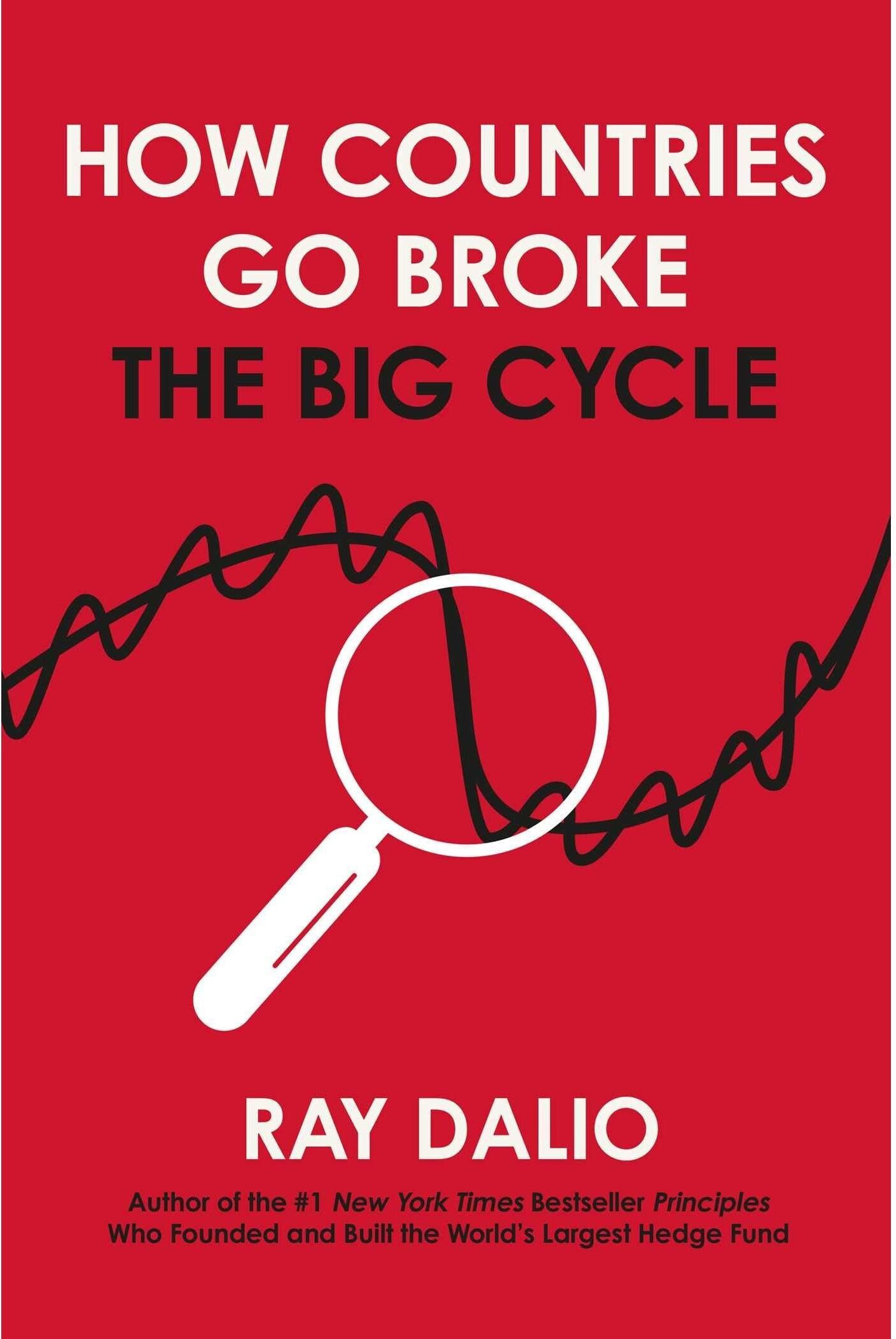
Simon and Schuster UK How Countries Go Broke: Principles for Navigating the Big Debt Cycle, Where We Are Headed, and What We Should DoAn urgent warning about the global economy from Ray Dalio, the #1 New York Times bestselling author of Principles. Do big government debts threaten our collective well-being? Are there limits to debt growth? Can a big, important reserve currency country like the United States really go broke – and what would that look like? For decades, politicians, policymakers and investors have debated these questions, but the answers have eluded them. In this groundbreaking book, Ray Dalio, one of the greatest investors of our time who anticipated the 2008 global financial crisis and the 2010–12 European debt crisis, shares for the first time his detailed explanation of what he calls the 'Big Debt Cycle'. Understanding this cycle is critical for helping policymakers, investors and the general public grasp where we are and where we are headed with the debt issue. Dalio's model points toward surprisingly straightforward solutions for dealing with the debt problems that the US, Europe, Japan and China face today. How Countries Go Broke also shows how these debt problems are related to the other forces – political within countries, geopolitical between countries, natural (droughts, floods and pandemics) and technological (most importantly, AI) – that together are causing what Dalio calls the 'Overall Big Cycle' changes in the world order. By reading this book, you will improve your understanding of what's happening now and what to do about it.17,99 £*Shipping: 2,99 £Secure redirect to the provider
-
Simon & Schuster Rage by Bob WoodwardWoodward, the No 1 international bestselling author of Fear: Trump in the White House, has uncovered the precise moment the president was warned that the Covid-19 epidemic would be the biggest national security threat to his presidency. In dramatic detail, Woodward takes readers into the Oval Office as Trumps head pops up when he is told in January 2020 that the pandemic could reach the scale of the 1918 Spanish Flu that killed 675,000 Americans. In 17 on-the-record interviews with Woodward over seven volatile months - an utterly vivid window into Trumps mind - the president provides a self-portrait that is part denial and part combative interchange mixed with surprising moments of doubt as he glimpses the perils in the presidency and what he calls the 'dynamite behind every door'. At key decision points, Rage shows how Trumps responses to the crises of 2020 were rooted in the instincts, habits and style he developed during his first three years as president. Revisiting the earliest days of the Trump presidency, Rage reveals how Secretary of Defense James Mattis, Secretary of State Rex Tillerson and Director of National Intelligence Dan Coats struggled to keep the country safe as the president dismantled any semblance of collegial national security decision making. Rage draws from hundreds of hours of interviews with first-hand witnesses as well as participants notes, emails, diaries, calendars and confidential documents.13,99 £*Shipping: 2,99 £Secure redirect to the provider
-
Is socialism environmentally friendly?
Socialism can be environmentally friendly as it often emphasizes collective ownership and control of resources, which can lead to more sustainable practices. By prioritizing the needs of the community over profit, socialist systems may be more inclined to implement policies that protect the environment. However, the extent to which socialism is environmentally friendly can vary depending on how it is implemented and the specific policies put in place. Ultimately, a combination of socialist principles and environmental considerations can lead to a more sustainable and eco-friendly society. **
-
Are cruises environmentally friendly?
Cruises are not considered environmentally friendly due to their significant impact on marine ecosystems and air quality. Cruise ships produce large amounts of air and water pollution, including emissions from engines, waste disposal, and ballast water discharge. Additionally, the construction and operation of cruise ships contribute to carbon emissions and other environmental issues. Efforts are being made to improve the environmental sustainability of cruises, such as implementing cleaner technologies and waste management practices, but there is still a long way to go in making the industry truly eco-friendly. **
-
What can I do to live an environmentally friendly lifestyle and use environmentally friendly school supplies?
To live an environmentally friendly lifestyle, you can start by reducing your use of single-use plastics and opting for reusable alternatives such as water bottles, lunch containers, and shopping bags. You can also conserve energy by turning off lights and electronics when not in use, and by using energy-efficient appliances. When it comes to school supplies, look for items made from recycled materials and choose products that are biodegradable or compostable. Additionally, consider purchasing in bulk to reduce packaging waste and support companies that prioritize sustainability in their production processes. **
-
Is baking powder bio-based and environmentally friendly?
Baking powder is a chemical leavening agent that typically contains a combination of bicarbonate of soda, an acid, and a moisture-absorbing agent. While some baking powders may contain bio-based ingredients, such as cream of tartar as the acid component, the overall product is not considered entirely bio-based. In terms of environmental friendliness, baking powder is generally safe for the environment when used in moderation, as it breaks down into harmless substances during baking. However, excessive use of baking powder can contribute to sodium levels in waterways, which may have negative environmental impacts. **
* All prices are inclusive of VAT and, if applicable, plus shipping costs. The offer information is based on the details provided by the respective shop and is updated through automated processes. Real-time updates do not occur, so deviations can occur in individual cases. ** Note: Parts of this content were created by AI.